BlogPowder brows
Tired of drawing your brows every morning?
Pencil. Mirror. Fix one side. Fix the other. And tomorrow, do it all again.
You know the routine.
Pencil. Mirror. One brow looks a little darker. The other doesn’t quite match. You fix the tail, soften the front, check it again — and somehow you’re still not completely happy with the shape.
And it isn’t only the few minutes it takes.
It’s doing the same thing every morning.
Sparse areas that never fill exactly the same way. A tail that disappears first. One brow that always seems easier than the other.
Then there’s heat, humidity, the gym, swimming — or simply accidentally touching your face — and suddenly part of what you spent time drawing is gone.
Some mornings, you just want to get ready and leave.
That’s where powder brows can make such a difference.
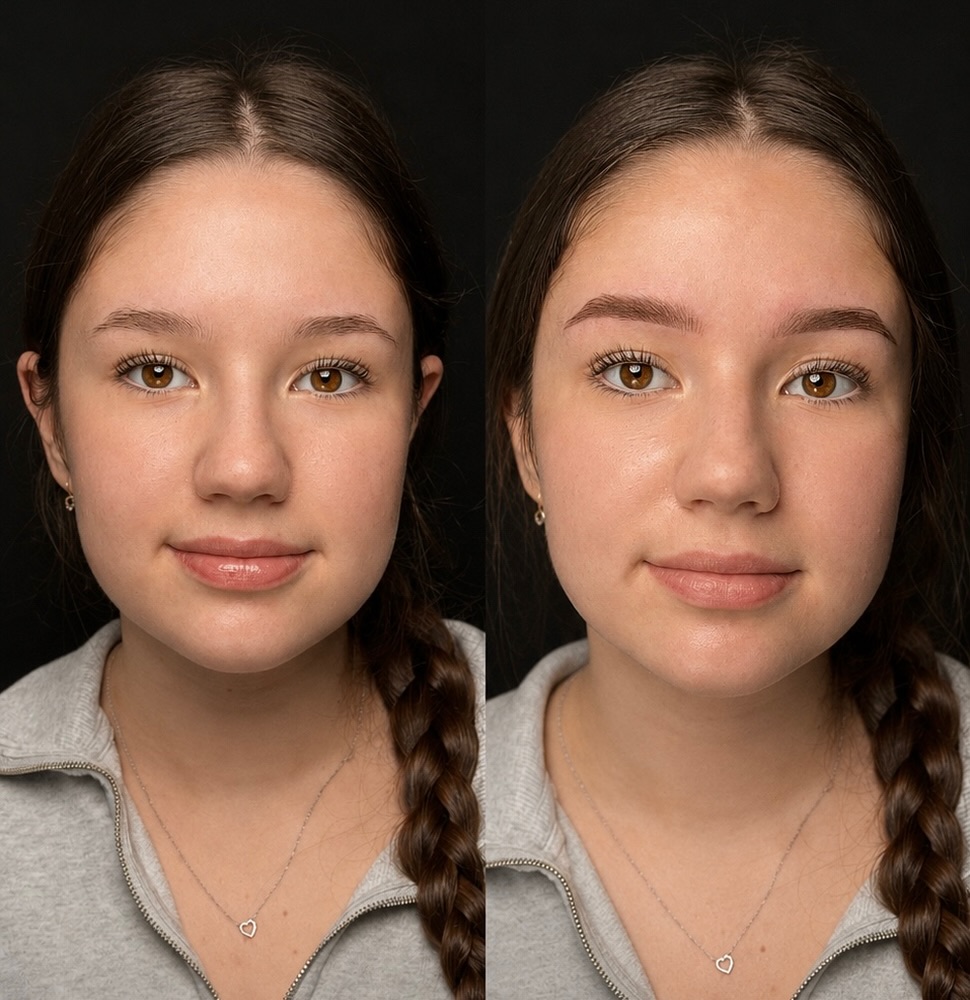
Powder brows create a soft, shaded effect similar to brows gently filled in with pencil — but the shape is already there when you wake up.
The front stays softer and more transparent, while the body and tail can have slightly more definition. The goal isn’t heavy or graphic brows. It’s a natural shape that still looks like you, just more balanced and finished.
Immediately after the procedure, the brows look darker and more defined. As they heal, the color softens significantly and settles into a much lighter, more natural result.
And instead of recreating your brows every morning, you have a shape to wake up with — through work, workouts, humidity and everyday life.
Powder brows can also work beautifully for women with sparse areas, uneven brows, oily skin or mature skin where other techniques may not always heal as predictably.
The process is done in two steps: the initial procedure, followed by a perfecting session after the skin has fully healed. The finished result typically lasts around 1–1.5 years, gradually becoming softer over time.
If this sounds like the look you’re already trying to create with your brow pencil, I wrote a full explanation of how powder brows work, what healing actually looks like, and who the technique is best suited for.


